
Raw vs Heat-processed Protein in Pellets
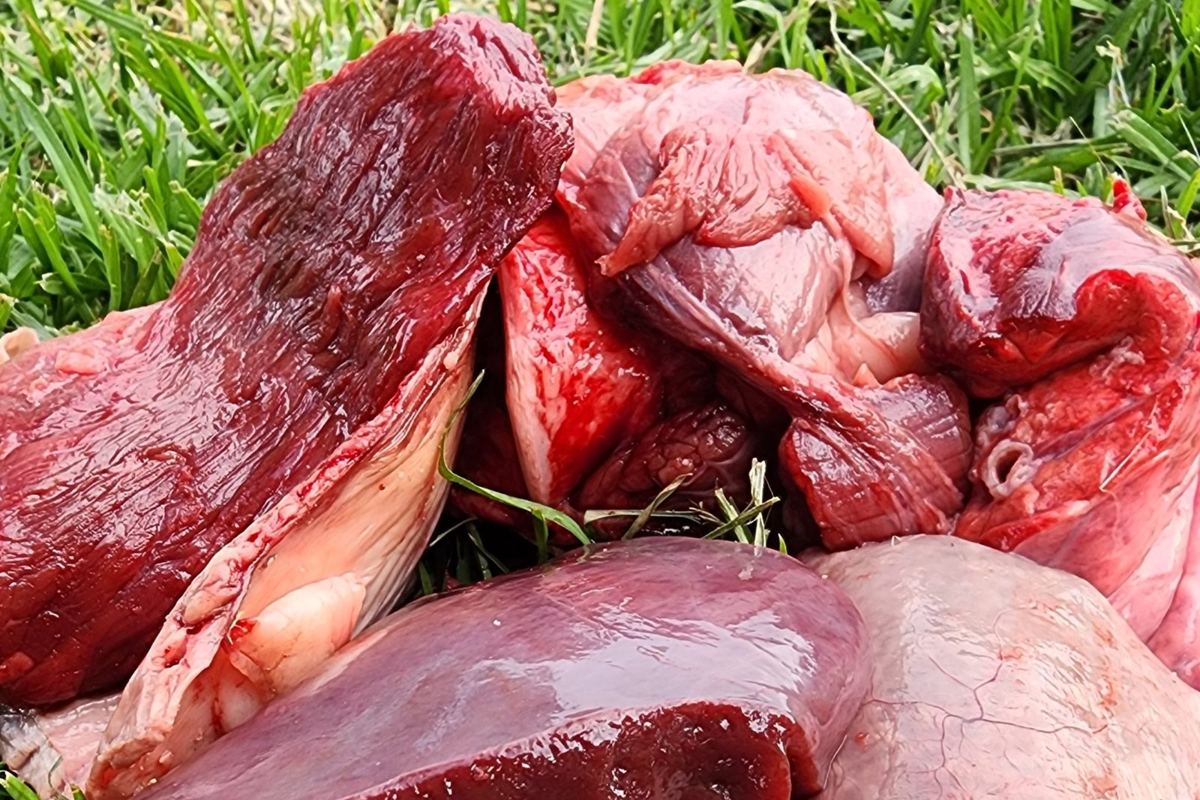
What raw offers
Raw meat and organs provide all 20 amino acids intact, because they have never been heat-processed. None of the protein has been through rendering, drying or extrusion, so none of the damage described below has happened. Raw muscle meat, and heart in particular, is also naturally rich in taurine. Dogs can make their own taurine in the liver, but they make it from methionine (essential) and cysteine, with vitamin B6 as a helper. These sulfur amino acids are among the most heat-sensitive: methionine is one of the six damaged by processing, and Norwegian researchers found cysteine digestibility dropped disproportionately in extruded dog food. So pellets lose some ready-made taurine and also some of the building blocks the dog uses to make its own. Raw supplies both: taurine itself, plus intact methionine and cysteine.
This matters because protein is what the body uses to maintain and repair itself. Muscle, skin, cartilage, and the enzymes and immune cells involved in healing are all built from amino acids. The more of the protein that arrives intact and digestible, the more building blocks the body has to work with.
Put simply: raw feeding gives your dog complete protein in its natural form, as close as possible to what the label says is there.
The protein percentage on a bag of pellets tells you how much protein is in it, not how much your dog can actually use. The difference comes down to where that protein comes from and what heat does to it on the way into the bag.
This post looks at what the research says, including where it supports raw feeding and where it doesn’t go as far as some people claim.
Amino acids: the building blocks
Protein is built from 20 amino acids. A dog’s body can make 10 of them itself. The other 10 must come from food, so they’re called essential: arginine, histidine, isoleucine, leucine, lysine, methionine, phenylalanine, threonine, tryptophan and valine.
Meat is a complete protein, meaning it supplies every essential amino acid in useful amounts. Grain protein isn’t complete. It’s low in lysine, and maize is also low in tryptophan.
All pellets still contain all 20 amino acids. What matters is how much of the protein comes from grain rather than meat, and what condition those amino acids are in by the time they reach the bowl.
Reading the ingredient list
Ingredients are listed by weight before processing. Fresh meat is about 70% water, so “chicken” listed first can end up supplying less protein than a dry meat meal listed further down.
In many economy pellets, maize or wheat comes first and meat meal comes third or fourth. A large share of the protein in those foods is plant protein of lower quality.
To make up the shortfall, manufacturers often add synthetic amino acids. Look further down the list for L-lysine and DL-methionine. Their presence tells you the base ingredients needed topping up.
What heat does to the protein
Meat meal goes through several rounds of heat before it reaches the bowl:
- Rendering: raw material is cooked at high temperature.
- Drying: the cooked material is dried into meal.
- Extrusion: the meal is mixed with the other ingredients and cooked again under heat and pressure to form pellets. Many pellets are dried again afterwards.
The Maillard reaction. Heat makes lysine bind to sugars, and lysine bound this way can’t be used by the body. Researchers at Wageningen University tested 67 commercial pet foods. 60 of them had less usable lysine than total lysine. In dog foods, on average:
| Food type | Share of lysine still usable |
|---|---|
| Canned | 97% |
| Extruded (pellets) | 87% |
| Pelleted | 85% |
| Worst single food (extruded, for growing dogs) | 77% |
Earlier studies they reviewed found an average of 73%, with a range from 39% to 100%.
It isn’t only lysine. When protein meals are heated, lysine, arginine, histidine, threonine and methionine all drop. Early research on heat-processed meat meals, done in pigs, suggests tryptophan may be affected too, though the evidence for it is less clear. Heat also creates cross-links inside the protein, which make the amino acids around them harder to digest.
The effect on digestibility.
- Chicken meal has more crude protein on paper than fresh chicken, but its amino acid digestibility measured 78–88%. Steamed chicken measured over 90% for most essential amino acids.
- Diets that were never heat-processed, such as freeze-dried raw, had higher amino acid digestibility than extruded diets.
- In one trial, methionine from chicken meal was less usable than methionine from peas. The researchers suggested damage during rendering as the likely cause.
Much of the damage happens before the pellet is even made. The Wageningen researchers found that the rendered ingredients themselves were the main factor, more than the final extrusion step.
Why the label looks better than it is
The crude protein figure on a bag counts all the protein in the food. That includes damaged amino acids and protein the dog digests poorly.
Some brands publish amino acid figures for the finished food. The standard laboratory test measures total lysine, and that method converts damaged lysine back into normal lysine. So the figure on paper is higher than what the dog can use. The Wageningen researchers recommended measuring usable (“reactive”) lysine and digestibility instead.
A note on words: “denatured” isn’t the same as “damaged.” Denaturing simply means the protein unfolds. Any cooking does it, and it doesn’t destroy amino acids. The losses come from heavier heating: the Maillard reaction, cross-linking and oxidation.
What the research doesn’t say
We believe in being honest about the evidence, so here’s what it doesn’t show:
- Pellets aren’t missing amino acids. They contain all 20; the problem is damage and lower digestibility.
- Most adult pellets still met the minimums. In the Wageningen study, all adult dog foods met minimum lysine requirements despite the losses. The foods at risk were eight dry foods for growing dogs, where the margin was small.
- Brands vary. Some premium pellets list meat first and use less rendered meal. Everything above applies most to economy brands built on grain and meat meal.
The fair conclusion isn’t that pellets are worthless. It’s that the protein figure on the bag overstates what the dog actually gets. Heat processing damages 60% of the essential amino acids: at least 6 of the 10 (lysine, methionine, arginine, threonine, histidine and tryptophan) are affected, so part of each of these is changed and the dog’s body can no longer use them. It also makes the remaining protein harder to digest. In the research, typically 10–15% of the lysine in pellets could no longer be used, and up to 23% in the worst food. Chicken meal’s amino acids were 78–88% digestible, compared with over 90% for gently cooked chicken. So a bag that says 25% protein delivers less than 25% protein the dog can build and repair with. Raw protein hasn’t been heat-processed, so what’s there is what the dog gets.
Sources
- van Rooijen et al. (2014), Reactive lysine content in commercially available pet foods, Journal of Nutritional Science
- van Rooijen (2015), Maillard reaction products in pet foods, PhD thesis, Wageningen University
- Chemical determinants of protein digestibility and heat damage in animal products, Aquaculture America 2026
- Balancing nutrition and sustainability, Global Pet Industry
- Effects of pet food format on amino acid digestibility, PMC
- Metabolic availability of methionine in chicken meal and peas
- Utilization of ileal digestible amino acids by growing pigs: tryptophan, British Journal of Nutrition